
Fostering Inclusivity in Ocean Literacy: Challenges and Next Steps identified during the BiodivOcean Symposium
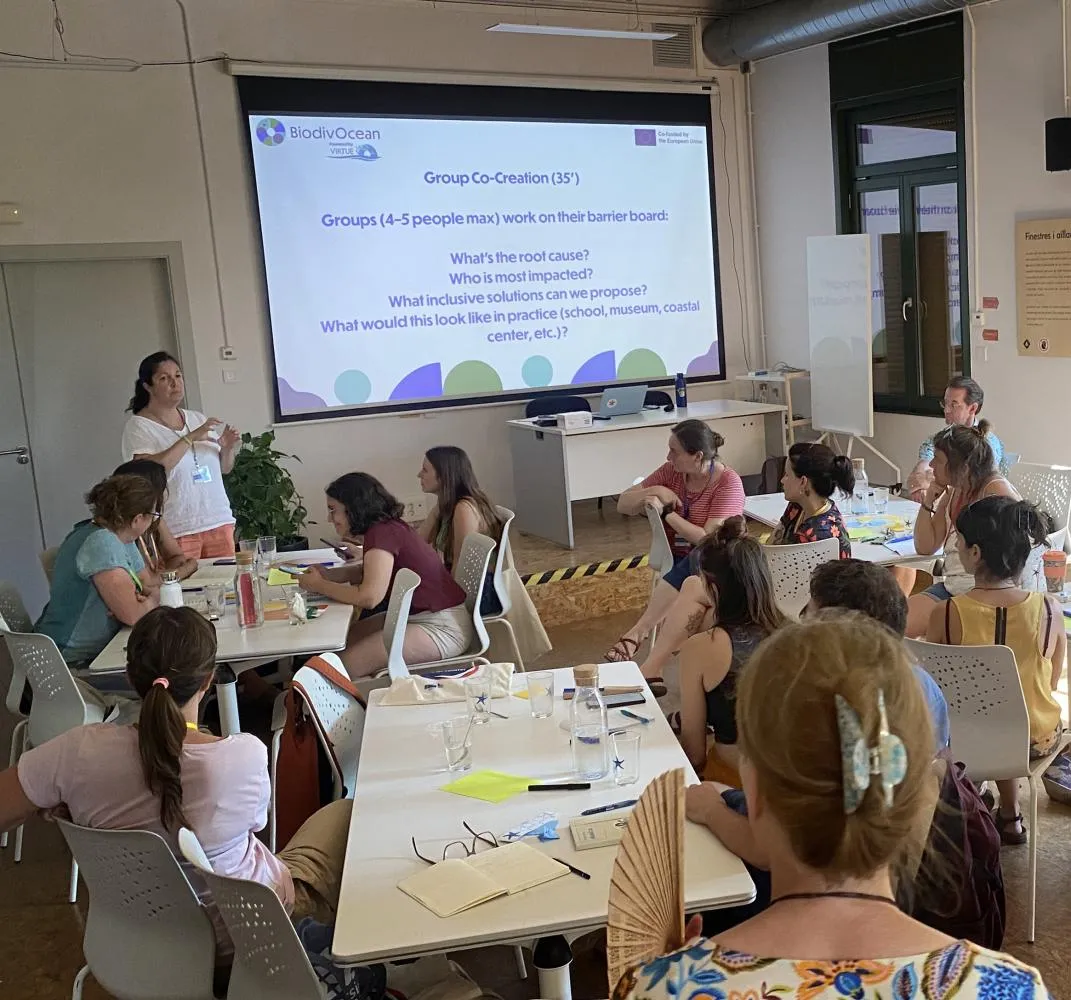
Throughout the years, ocean literacy has become a global education tool for better understanding our planet. Yet, making ocean education accessible, engaging, and inclusive for all learners remains a challenge. The outcomes from the BiodivOcean Teacher Symposium offered valuable insights into how educators can move toward a more inclusive and interdisciplinary approach to teaching about the ocean.
The symposium brought together environmental educators and teachers to explore how the VIRTUE methodology can transform ocean education. Over three days of diverse workshops, participants reflected both the barriers and opportunities in bringing ocean literacy into diverse classrooms. The conclusions are highly relevant for any educator seeking to make science more inclusive, practical, and meaningful.
Why Inclusivity Matters in Ocean Literacy
Inclusivity in ocean literacy goes beyond ensuring direct access to the sea—it means creating learning environments where all students, regardless of their background, abilities, or resources, can meaningfully connect to the ocean. In ocean literacy, this is particularly important, as it is wrongly thought that we can’t understand the ocean unless we are at the beach.
During the BiodivOcean Symposium, educators explored the present barriers to bringing the ocean to their classrooms and thought about ways to overcome them.
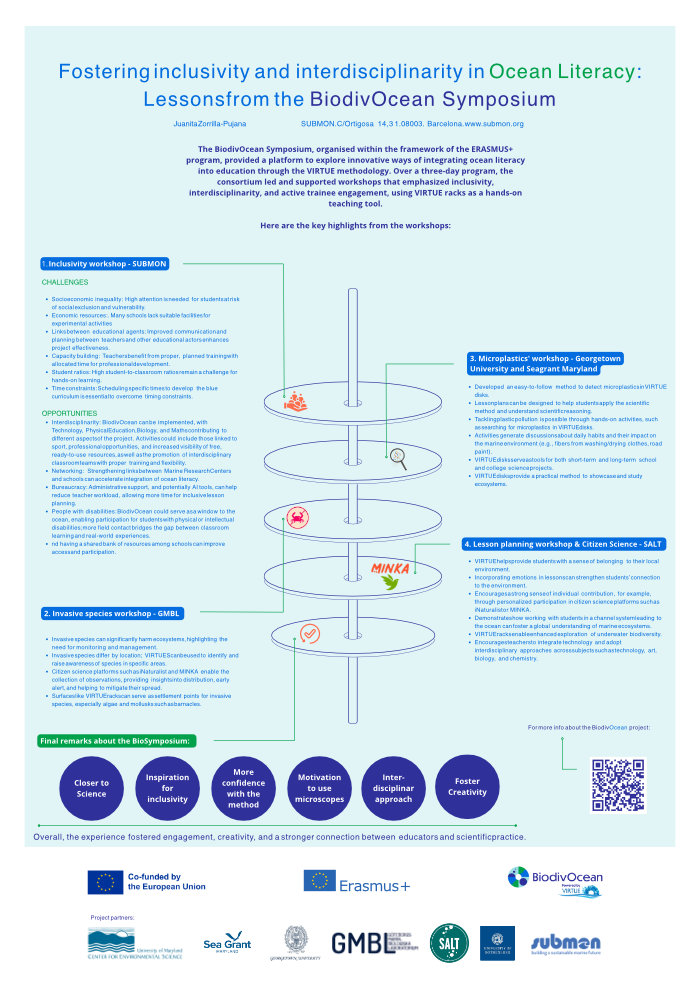
Key Challenges Identified by Educators
1. Socioeconomic Inequality
Students from vulnerable backgrounds often lack access to resources, field trips, or extracurricular science opportunities. Without intentional design, ocean literacy risks reinforcing these inequalities.
2. Limited School Resources
Many schools do not have the facilities or equipment needed for experimental or hands-on learning. This can make it difficult to implement engaging science activities.
3. Time Constraints and Curriculum Pressure
Teachers frequently struggle to integrate new content into already packed curricula. Ocean literacy, unless embedded strategically, can feel like an “extra” rather than a core component.
4. High Student-to-Teacher Ratios
Large class sizes make it challenging to carry out hands-on, inquiry-based activities that require close guidance and interaction.
5. Lack of Training and Coordination
Educators need time and structured professional development to feel confident using new methodologies. Additionally, better coordination between schools, researchers, and external organizations is needed.
These challenges are not unique to ocean literacy—they reflect broader systemic issues in education. However, addressing them is essential if ocean education is to reach all learners.
Opportunities for More Inclusive Ocean Education
The Symposium also set the stage to discuss how to overcome the beforementioned barriers.
Interdisciplinary Learning
Ocean literacy does not have to sit solely within science classes. Teachers explored how it can be integrated across subjects such as mathematics, physical education, technology, and even art. For example, students might analyze marine data in math, explore ocean-related careers in career guidance sessions, or create artistic representations of marine ecosystems. This approach not only enriches learning but also reaches students with different interests and strengths.
Hands-On and Low-Cost Experiential Methods
The VIRTUE methodology stood out as a powerful tool for engagement. By using structures like VIRTUE racks and disks to observe marine life, students can participate in real scientific processes. Workshops demonstrated how these tools can be used to study biodiversity, detect microplastics, and monitor invasive species.
Citizen Science as a Gateway to Inclusion
Citizen science platforms such as iNaturalist and MINKA were highlighted as effective ways to involve students in real-world research. These tools allow students to collect and share data, contributing to global scientific efforts. Importantly, citizen science fosters a sense of belonging and agency. Students begin to see themselves as part of a broader scientific community, regardless of their academic level or background.
Emotional Engagement and Connection
Another key takeaway was the importance of incorporating emotions into learning. When students feel connected to the ocean—through storytelling, personal reflection, or local environmental issues—they are more likely to engage deeply and retain knowledge. This emotional dimension is often overlooked but is crucial for inclusivity. It allows students who may not initially identify as “science-oriented” to connect with the subject in meaningful ways.
Networking and Collaboration
Strengthening connections between schools and marine research centers was identified as a major opportunity. Partnerships can provide access to expertise, resources, and real-world contexts that enrich classroom learning.
Additionally, sharing resources among schools—such as lesson plans, materials, and best practices—can help reduce disparities and support teachers with fewer resources.
Reducing Teacher Workload
Administrative burdens often limit teachers’ ability to innovate. Participants noted that better institutional support—and even the use of AI tools—could help reduce workload, freeing up time for inclusive lesson planning and creative teaching approaches.
Practical Lessons from the Workshops
Each workshop at the symposium provided concrete examples of how to include ocean literacy in the classroom, and how it can be applied across multiple school subjects:
- Microplastics workshop: Researchers from Maryland SeaGrant and Georgetown University (Adam Frederick and Jesse Meiller respectively) showed participants a simple method to detect microplastics using VIRTUE disks and simple laboratory equipment. This activity not only teaches about the scientific method but also sparks discussions about daily habits and environmental impacts.
- Invasive species workshop: Led by Björn Källström from GMBL, participants explored how local ecosystems are affected by invasive species and how monitoring techniques can be adapted to different geographical contexts.
- Lesson planning and citizen science workshop: Anna-Lisa Wrange from Gothenburg University and Elina Hutton from SALT conducted a talk and a workshop providing insights on how to design lesson plans that include citizen science activities, highlighting the importance of making science tangible, relevant, and participatory.
A Call to Action for the Education Community
The lessons from the BiodivOcean Teacher Symposium are clear: inclusivity in ocean literacy is crucial and there are ways to achieve it. It requires a shift in how we design learning experiences, moving from rigid, content-heavy approaches to hands-on, student-centered ones.
For educators, this might mean starting small:
- Integrating ocean-related examples into existing lessons
- Exploring citizen science platforms with students
- Collaborating with colleagues across disciplines
- Prioritizing hands-on and inquiry-based activities
For schools and institutions, it means investing in teacher training, fostering partnerships, and ensuring equitable access to resources.
Looking Ahead
As time goes by, the ocean's influence on our daily lives becomes harder to ignore. Education remains one of the most powerful drivers of societal change, and ocean literacy deserves a place in the curriculum as an essential subject, not a secondary one.
The BiodivOcean Symposium demonstrated that when educators are given the tools, support, and inspiration, they can create learning experiences that are not only educational but transformative. By embracing inclusivity and interdisciplinarity, ocean literacy can become a powerful force for both education and environmental change.
Ultimately, bringing the ocean into the classroom is not just about teaching science: it is about building connections, fostering curiosity, and empowering every student to see their place in the world.
